Creamy Mac and Cheese on the Stovetop (Ready in 25 Minutes)
You know that hour when the day is technically over but your brain hasn’t caught up yet? Shoes kicked off by the door, phone still buzzing with group chats, and you’re standing in front of the pantry like it owes you an answer. You’re not hungry enough for a real dinner. You just want something warm, a little indulgent, and eaten straight from a bowl on the couch.
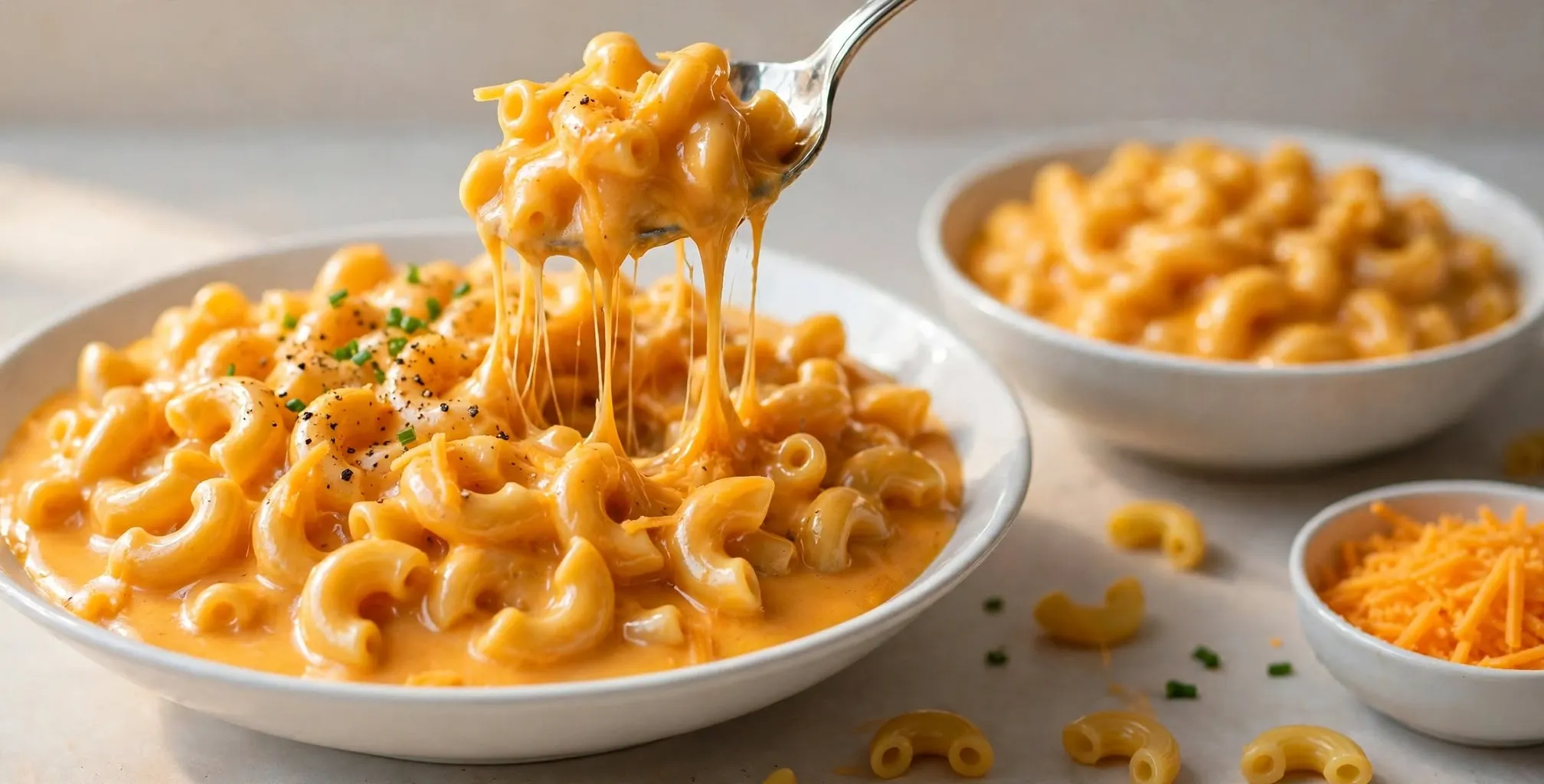
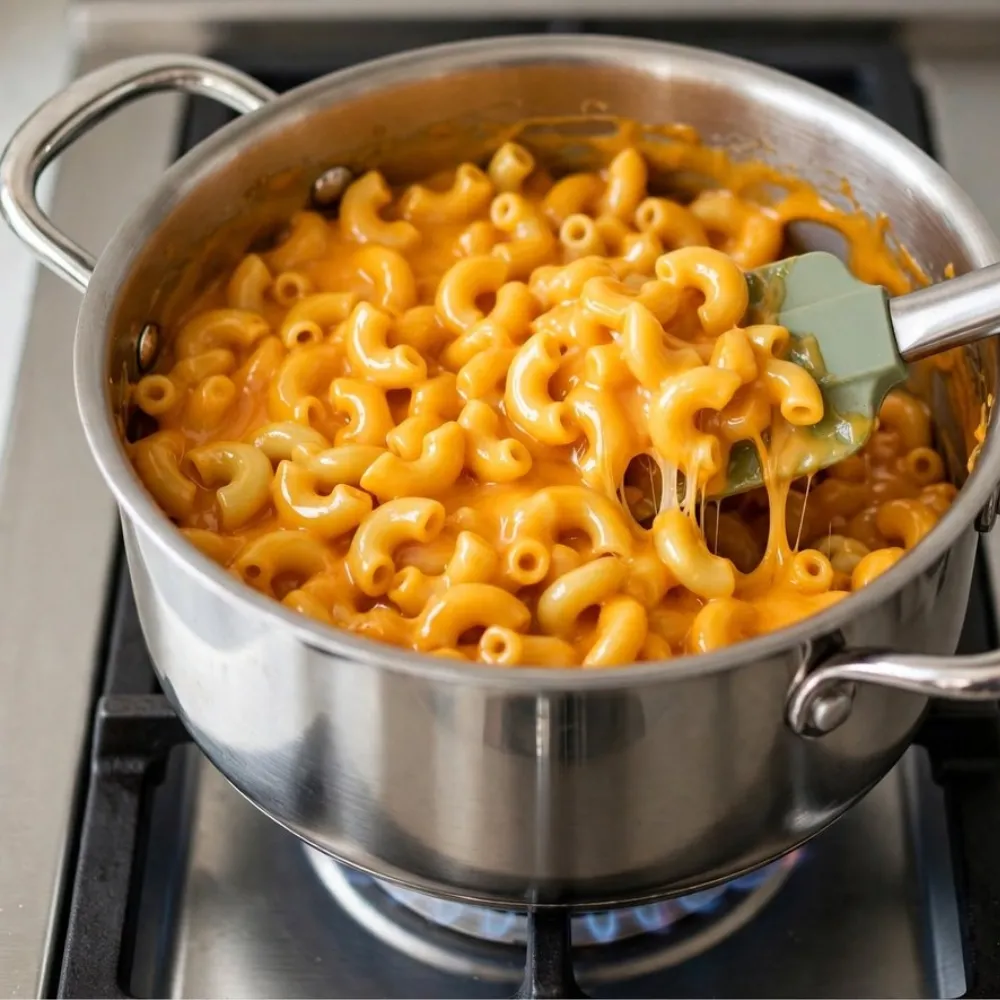
That’s exactly the moment this mac and cheese was made for. One pot of pasta, one quick cheese sauce, and about 25 minutes between you and a bowl of tender elbows coated in a glossy, golden sauce that actually clings. The sharp cheddar hits first, then a nutty, mellow finish, and every spoonful pulls into those soft, stretchy strings.
It works on a slow Sunday, a rushed Tuesday, or any random snack attack in between. Let’s walk through how to get it silky every single time.

Why This Recipe Works
- The sauce stays smooth, not grainy, because the cheese melts off the heat into a warm roux-thickened milk base.
- It’s ready in about 25 minutes, since the pasta boils while you build the cheese sauce.
- Two cheeses give it real flavor, with sharp cheddar for tang and Gruyère for a nutty, melty finish.
- A pinch of dry mustard brightens everything, cutting through the richness without tasting like mustard.
- It uses pantry basics, so you can make homemade mac and cheese without a special grocery run.
- Slightly undercooked pasta finishes in the sauce, so the noodles soak up flavor instead of turning mushy.

Ingredient Notes
- Elbow macaroni: The classic shape holds sauce inside its curve; any short tube pasta works.
- Unsalted butter: Forms the base of the roux and adds richness; unsalted lets you control the seasoning.
- All-purpose flour: Thickens the milk so the sauce coats instead of running off the pasta.
- Whole milk: Gives a creamy body; warm it first so the sauce thickens evenly without lumps.
- Sharp cheddar: Brings the bold, tangy flavor; buy a block and grate it yourself for the smoothest melt.
- Gruyère: Adds a nutty depth and extra stretch; Monterey Jack is a milder, budget-friendly swap.
- Dry mustard powder: Sharpens the cheese flavor without any mustard taste.
- Garlic powder: A quiet savory note that rounds out the sauce.
- Salt and black pepper: Salt the pasta water well, then taste the sauce before adding more.
Substitutions Table
| Ingredient | Substitute | Effect on Result |
|---|---|---|
| Elbow macaroni | Shells, cavatappi or penne | Same flavor; shells and cavatappi trap even more sauce |
| Whole milk | 2% milk | Slightly thinner, lighter sauce |
| Whole milk | Half-and-half (half the amount) + milk | Richer, silkier sauce |
| Gruyère | Monterey Jack or fontina | Milder flavor, still very melty |
| Sharp cheddar | Colby or mild cheddar | Softer, less tangy cheese flavor |
| All-purpose flour | Cornstarch (1½ tbsp, mixed into cold milk) | Gluten-free option; slightly glossier sauce |
| Dry mustard powder | ½ tsp Dijon mustard | Similar brightness, faint mustard note |
| Butter | Olive oil | Works in a pinch; less rich flavor |
Equipment Needed
- Large pot for boiling the pasta
- Medium heavy-bottomed saucepan (a thick base keeps the roux and milk from scorching)
- Whisk (essential for a lump-free sauce)
- Box grater (freshly grated cheese melts far smoother than pre-shredded)
- Colander
- Silicone spatula or wooden spoon
- Small microwave-safe jug or saucepan for warming the milk
Step-by-Step Directions
1. Grate the cheese and warm the milk
Grate the cheddar and Gruyère into a bowl, then warm the milk until it steams but doesn’t boil.
Why: Warm milk blends into the roux smoothly, while cold milk can cause lumps and slow thickening.
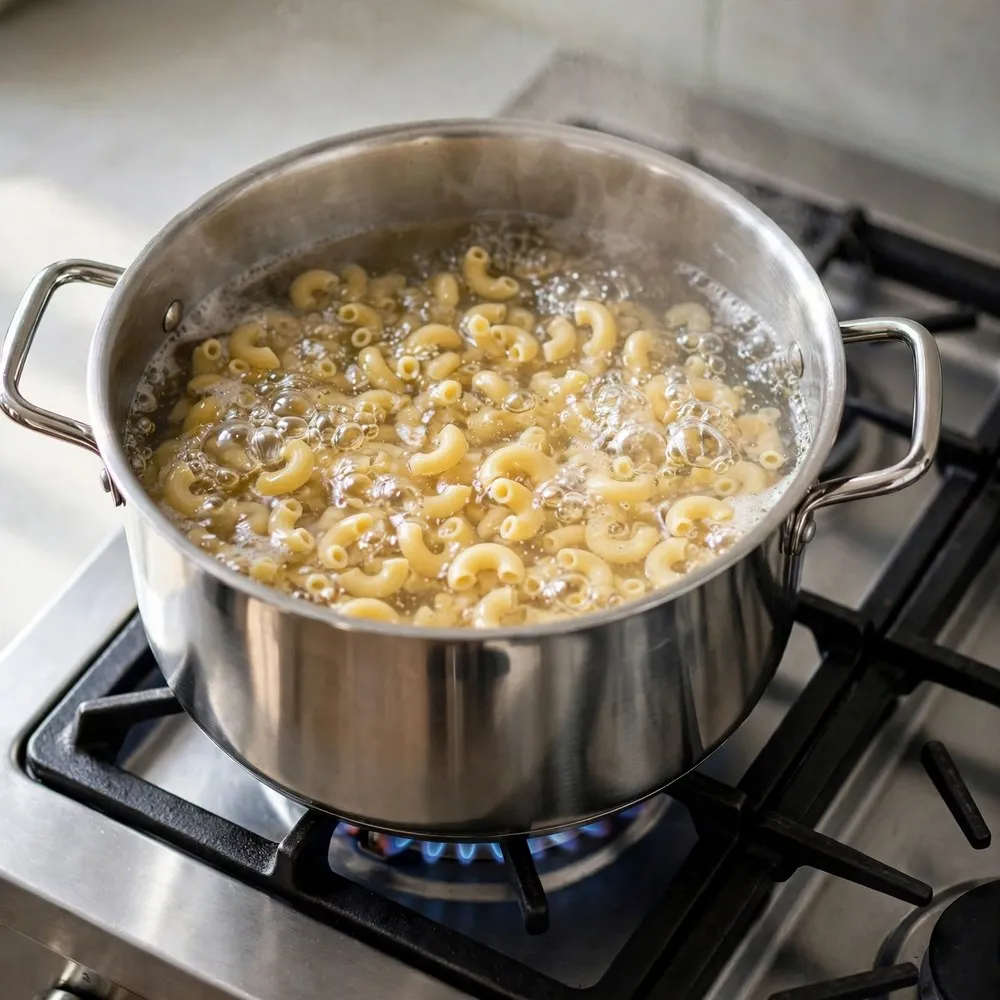
2. Boil the pasta
Cook the macaroni in well-salted boiling water for 1 to 2 minutes less than the package says, then drain.
How to know: The pasta should bend easily but still have a firm bite in the center; it finishes softening in the sauce.
3. Make the roux
Melt the butter in the saucepan over medium heat, whisk in the flour, and cook for 1 minute.
How to know: The paste should bubble and smell lightly toasty, not brown, which removes the raw flour taste.
4. Whisk in the milk
Pour the warm milk in slowly while whisking, then simmer gently for 3 to 4 minutes, stirring often.
How to know: The sauce is ready when it coats the back of a spoon and a finger swipe leaves a clean line.
5. Season the base
Whisk in the dry mustard, garlic powder, salt, and pepper.
Why: Seasoning before the cheese goes in lets the spices dissolve evenly.
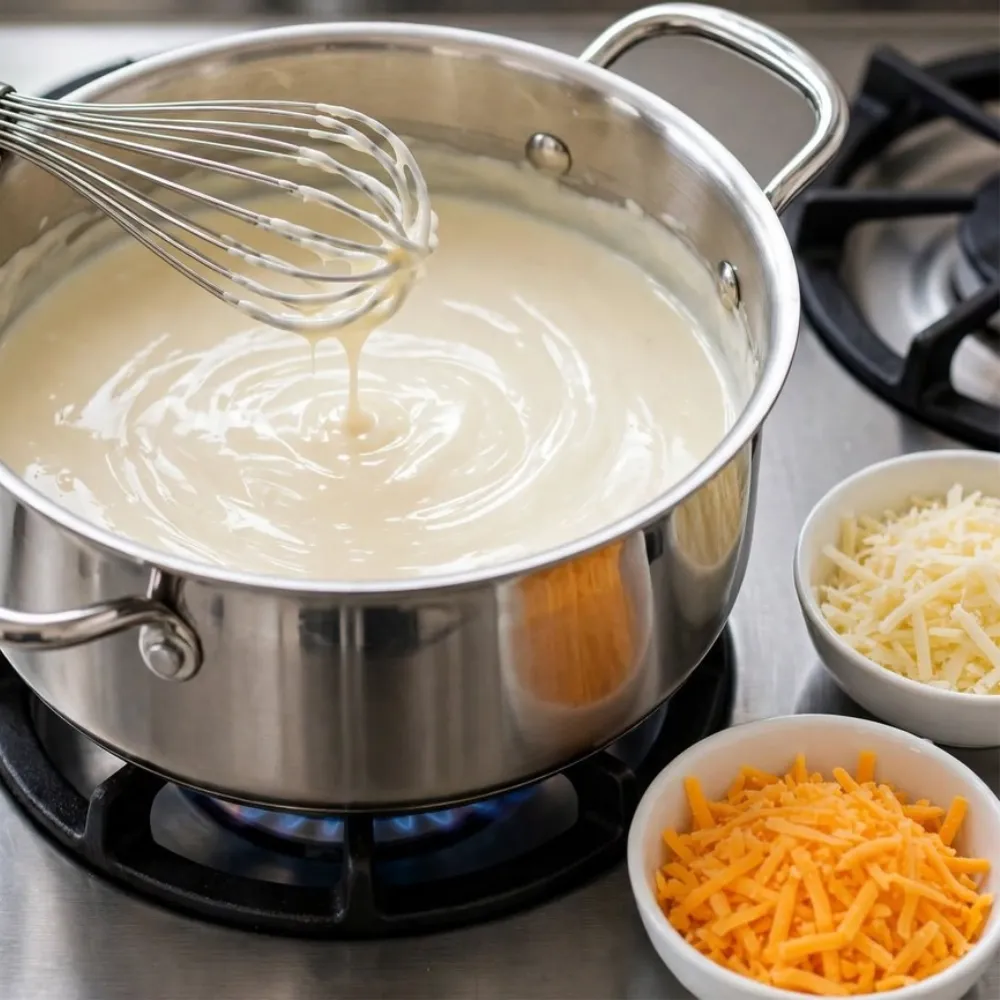
6. Melt in the cheese off the heat
Take the pan off the burner and stir in the cheese a handful at a time until smooth and glossy.
Why: Too much heat makes cheese tighten and turn oily or grainy, so gentle residual heat gives the silkiest result.
7. Combine and finish
Add the drained pasta to the cheese sauce and stir over low heat for 1 to 2 minutes, adding a splash of milk if it gets too thick.
How to know: The sauce should look loose and glossy; it thickens more as it sits, so slightly runny is perfect.
Recipe Card

Mac and Cheese
Ingredients
- 8 oz 225 g elbow macaroni
- 3 tbsp unsalted butter
- 3 tbsp all-purpose flour
- 2½ cups whole milk warmed
- 2 cups 8 oz sharp cheddar, freshly grated
- ½ cup 2 oz Gruyère, freshly grated
- ½ tsp dry mustard powder
- ¼ tsp garlic powder
- ½ tsp salt plus more for the pasta water
- ¼ tsp black pepper
Instructions
- Grate both cheeses and warm the milk until steaming.
- Boil the macaroni in salted water for 1 to 2 minutes less than the package directions, then drain.
- Melt the butter in a saucepan over medium heat, whisk in the flour, and cook for 1 minute.
- Slowly whisk in the warm milk and simmer for 3 to 4 minutes, stirring, until thick enough to coat a spoon.
- Whisk in the mustard powder, garlic powder, salt, and pepper.
- Remove from the heat and stir in the cheese a handful at a time until smooth.
- Add the pasta and stir over low heat for 1 to 2 minutes, loosening with a splash of milk if needed. Serve right away.
Notes
- Grate your own cheese; the anti-caking coating on pre-shredded bags can make the sauce grainy.
- The sauce thickens as it stands, so keep it slightly loose when you take it off the heat.
- Reheat leftovers with 1 to 2 tablespoons of milk per serving to bring back the creaminess.
Nutrition (per serving, approximate): Calories 685 · Carbohydrates 55 g · Protein 30 g · Fat 37 g · Saturated Fat 22 g · Fiber 2 g · Sugar 7 g · Sodium 820 mg
Tips for the Best Results
Ingredient Tips
- Let the grated cheese sit out for 10 minutes so it melts faster and more evenly.
- Choose an aged sharp or extra-sharp cheddar for the boldest cheesy flavor.
- Salt the pasta water until it tastes like mild seawater; it’s your only chance to season the noodles themselves.
Mixing Tips
- Add the milk in three pours, whisking smooth after each, to keep the cheese sauce lump-free.
- Stir the cheese in with a spatula rather than a whisk once it’s melting, so it doesn’t clump around the wires.
- Save ½ cup of pasta water before draining; a splash loosens the sauce and helps it cling.
Cooking Tips
- Keep the roux at a steady medium heat; if the butter starts to brown, lower the flame.
- Never let the sauce boil once the cheese is in, or it may split.
- Serve within a few minutes of combining, while the stovetop mac and cheese is at its creamiest.
Troubleshooting Guide
Why is my mac and cheese sauce grainy?
The cheese was likely added over high heat or came from a pre-shredded bag with anti-caking starch. Grate a block yourself and stir it in off the heat.
Why did my cheese sauce get oily or separate?
The sauce got too hot after the cheese went in, which forces the fat out. Whisk in a splash of warm milk over very low heat to bring it back together.
Why is my mac and cheese dry?
The pasta kept absorbing sauce as it sat, or it was overcooked to begin with. Stir in warm milk or reserved pasta water a tablespoon at a time until creamy again.
Why is my cheese sauce too thin?
The milk didn’t simmer long enough to thicken with the roux. Return it to low heat for another 2 to 3 minutes before adding the cheese.
Why does my mac and cheese taste bland?
The pasta water was under-salted or a mild cheese was used. Add a pinch more salt and mustard powder, and switch to extra-sharp cheddar next time.
Flavor Variations
Buffalo Chicken Mac and Cheese
Stir in shredded cooked chicken and 2 to 3 tablespoons of buffalo sauce, then top with sliced green onions.
Jalapeño Popper Mac and Cheese
Melt 2 ounces of cream cheese into the sauce and fold in diced pickled jalapeños for creamy heat.
Smoky Gouda Mac and Cheese
Swap the Gruyère for smoked Gouda and add a pinch of smoked paprika for a campfire-style flavor.
Broccoli Cheddar Mac and Cheese
Drop small broccoli florets into the pasta water for the last 3 minutes of boiling for an easy veggie boost.
Baked Crunchy-Top Mac and Cheese
Spread the finished pasta in a dish, top with buttered panko, and broil for 2 to 3 minutes until golden.
Serving Options
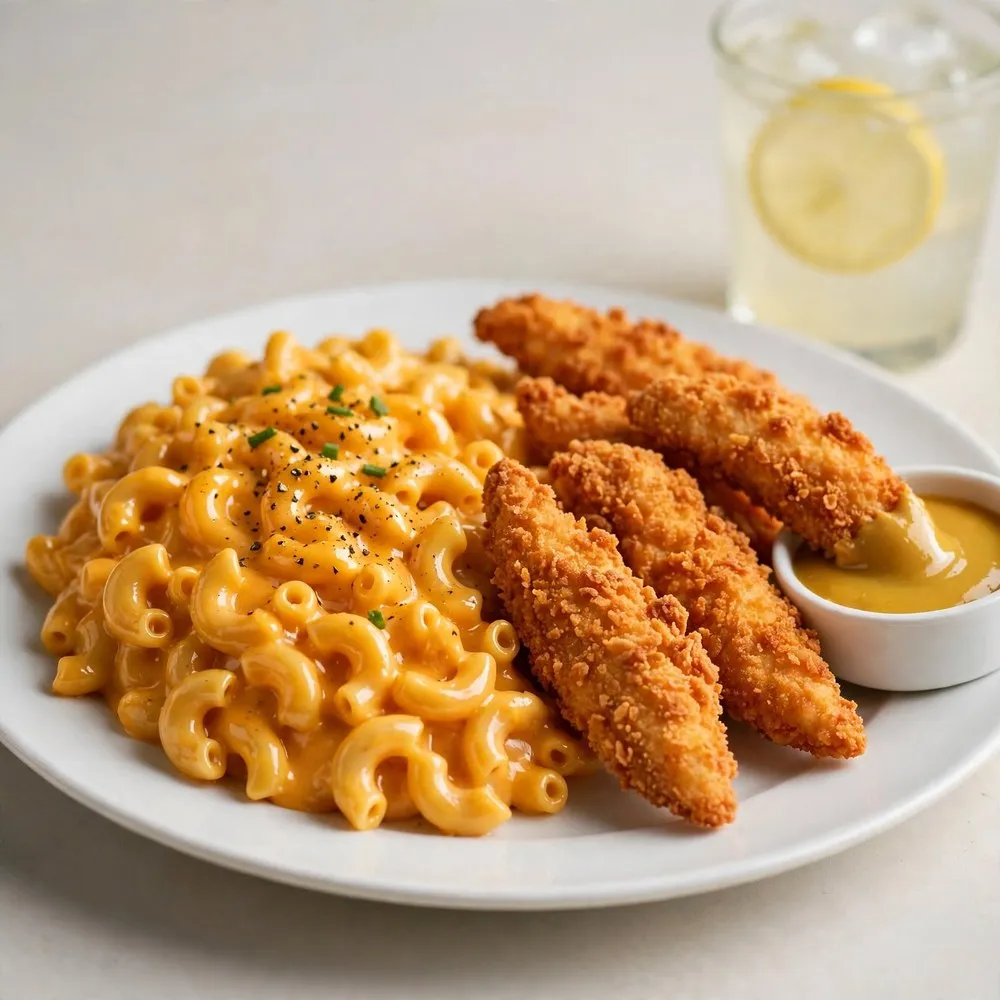
With Crispy Chicken Tenders
Pair a scoop with golden chicken tenders and a little honey mustard for a diner-style plate at home.
Alongside a Simple Green Salad
A bright lemony salad cuts through the richness and makes the bowl feel a bit more balanced.
Next to Barbecue or Grilled Meats
Serve it as the creamy side to ribs, or grilled sausages at your next cookout.
In a Mug for a Solo Snack
Spoon a single portion into a big mug and curl up with it for the easiest cozy treat.
Storage and Freezing
Room Temperature Storage
Don’t leave it out for more than 2 hours, since it’s dairy-based. Once it’s cooled, move it to an airtight container in the fridge, where it keeps for 3 to 5 days.
Freezing
Cool it completely, then pack single portions into freezer-safe containers with a little headspace. Freeze for up to 2 months; the sauce may be slightly less silky after thawing, but a splash of milk fixes that.
Thawing
Thaw overnight in the fridge, then reheat on the stovetop over low heat with 1 to 2 tablespoons of milk per serving, stirring until creamy. For the microwave, heat in 30-second bursts and stir between each.
Frequently Asked Questions
What is the best cheese for mac and cheese?
Sharp cheddar is the go-to for bold flavor, and pairing it with a smooth melter like Gruyère, fontina, or Monterey Jack gives the best texture. Mixing two cheeses balances tang with creaminess.
Can I make it without flour?
Yes. Skip the roux, simmer the milk with 1½ tablespoons of cornstarch whisked into a little cold milk, and then melt in the cheese. It turns out slightly glossier and is naturally gluten-free if you use gluten-free pasta.
How do you keep it creamy?
Keep the sauce a little loose when you take it off the heat and serve it right away. When reheating, always add a splash of milk and warm it gently.
Can I make it ahead of time?
You can make it up to a day ahead and refrigerate it. Reheat over low heat with extra milk, or bake it with a crumb topping so it feels freshly made.
Should you rinse pasta for mac and cheese?
No. The light starch coating on unrinsed pasta helps the cheese sauce cling to every piece.
Can I use evaporated milk in mac and cheese?
Yes, swapping up to half of the whole milk for evaporated milk makes an extra-rich, very stable sauce. It’s less likely to split and holds up well for leftovers.
How much mac and cheese does this recipe make?
It makes about 4 generous side servings or 3 main-dish bowls. Double everything and use a larger pot to feed a crowd.
Related Recipes
If this bowl hit the spot, these cozy favorites are worth a try next:
- Creamy Mashed Potatoes (Homemade and Make-Ahead)
- Green Bean Casserole
- Sweet Potato Casserole
- Crispy Fried Chicken Wings