Creamy Mashed Potatoes (Homemade and Make-Ahead)
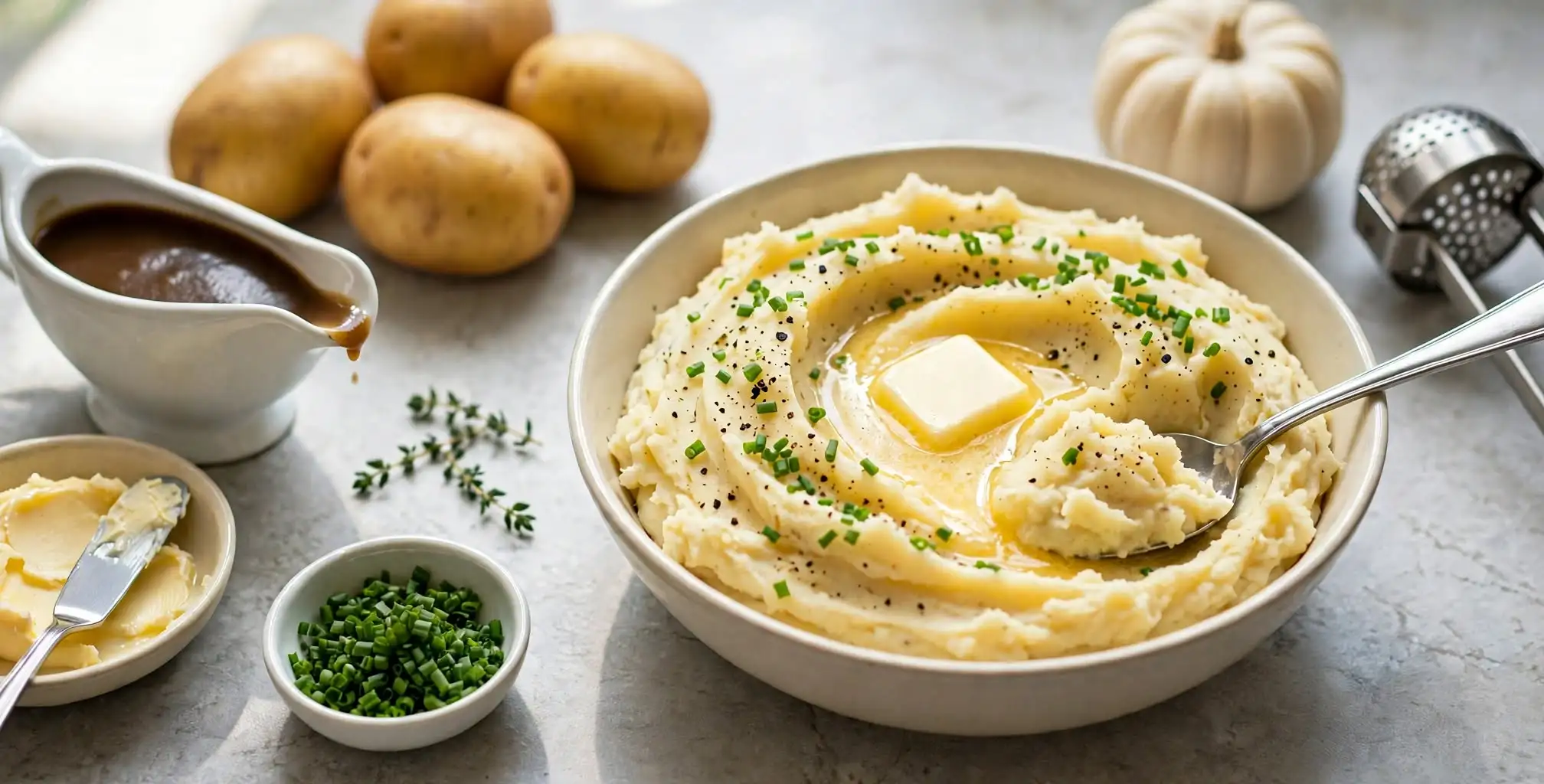
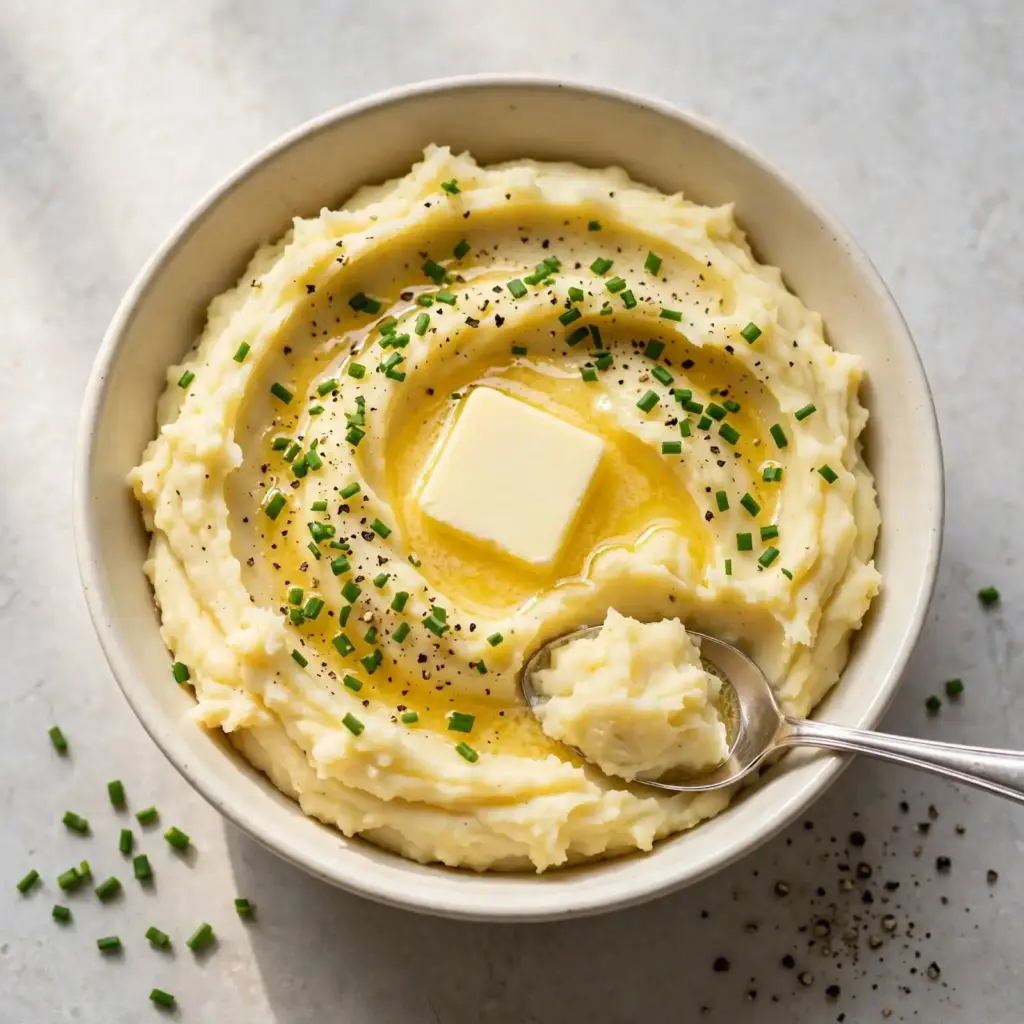
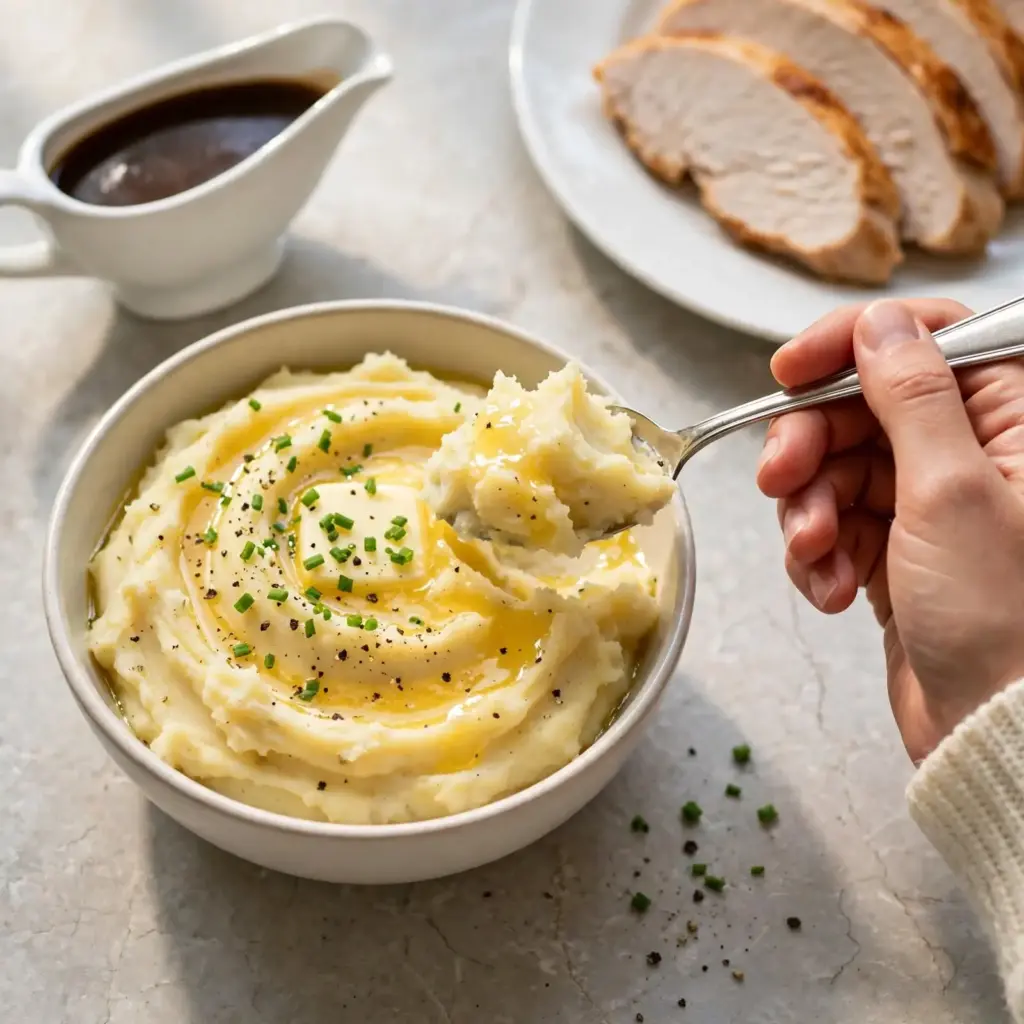
Isn’t there always one evening in late fall when dinner was hours ago, the house has gone quiet, and you want something warm without making a whole meal? Chips feel too loud for the mood, and a bowl of cereal just isn’t it. You want something soft you can eat with a spoon, curled up on the couch while the heater clicks on. That’s when a small bowl of homemade mashed potatoes makes perfect sense to me. Picture a fluffy, pale gold swirl with a pat of butter slowly melting into a glossy pool in the center, a few flecks of black pepper, and steam that smells sweet, buttery, and faintly earthy.
These creamy mashed potatoes are silky without feeling heavy, and they hold a soft peak on the spoon. They also happen to be the same side dish I’d proudly carry to a holiday table. Below, I’ll walk you through how I keep them smooth instead of gluey, and how to make them a day or two ahead.
Why This Recipe Works
- Yukon Golds bring built-in creaminess, since their medium starch breaks down smooth and buttery instead of grainy.
- Starting in cold, salted water cooks the potatoes evenly, so the outsides don’t crumble before the centers turn tender.
- A quick dry in the hot pot removes extra moisture, which lets the butter and cream soak in rather than pooling in a watery layer.
- Warm dairy blends in faster, keeping the mash hot and helping the fat melt evenly through every bite.
- Hand mashing protects the texture, because blenders and mixers on high overwork the starch and turn it paste-like.
- It reheats beautifully, which makes this an easy mashed potatoes recipe to prep ahead for weeknights or holidays.
Ingredient Notes
- Yukon Gold potatoes: The base and body of the dish; choose firm, smooth-skinned potatoes of similar size with no green patches or sprouts.
- Kosher salt (for the water): Seasons the potatoes from the inside as they cook; the water should taste lightly salty.
- Unsalted butter: Adds richness and golden flavor; unsalted lets you control the seasoning, and real butter tastes far better than spread.
- Whole milk: Loosens the mash to a soft, spoonable texture; lower-fat milk works but gives a thinner, less rich result.
- Heavy cream: Brings the silky, velvety finish; half-and-half works if you want it a little lighter.
- Fine salt and black pepper: The final seasoning; add gradually and taste, since potatoes need more salt than you’d expect.
- Fresh chives (optional): A mild oniony garnish that adds color; snip them just before serving so they stay bright.
Substitutions Table
| Ingredient | Substitute | Effect on Result |
|---|---|---|
| Yukon Gold potatoes | Russet potatoes | Fluffier and lighter, slightly drier; may need a splash more milk |
| Heavy cream | Half-and-half | A little less rich, still smooth |
| Heavy cream | Sour cream | Tangier, thicker mash with a slight zip |
| Whole milk | Chicken broth | Lighter, more savory flavor with less creaminess |
| Unsalted butter | Salted butter | Same texture; cut the added fine salt by about half |
| Chives | Green onion tops | Similar mild onion flavor, a bit sharper |
Equipment Needed
- Large pot (5 to 6 quarts), so the potatoes can be covered by an inch of water
- Vegetable peeler and sharp knife
- Small saucepan for warming the butter and dairy
- Colander
- Potato ricer or hand masher; a ricer gives the smoothest mashed potatoes, and a blender or food processor should be avoided
- Silicone spatula for folding in the dairy
How to Make Mashed Potatoes
1. Peel and Cut the Potatoes
Peel the potatoes and cut them into even 2-inch chunks.
Even pieces cook at the same speed, so you won’t end up with some mushy and some still hard.
2. Start Them in Cold, Salted Water
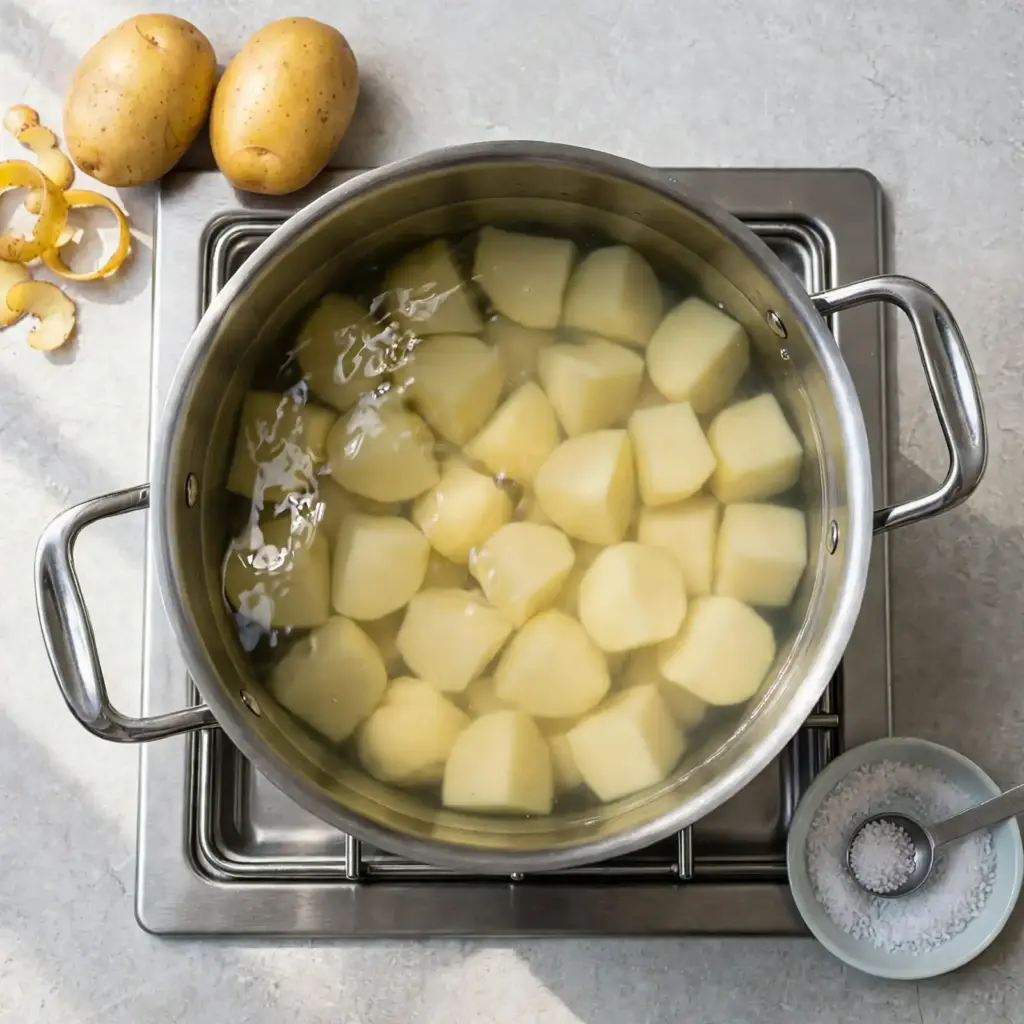
Place the chunks in a large pot, cover with cold water by about 1 inch, add the kosher salt, and bring to a boil over high heat. Then lower the heat to a steady simmer.
Starting cold lets the heat move through each piece gradually, which keeps the edges from falling apart.
3. Simmer Until Fork-Tender
Simmer for 15 to 20 minutes, until a knife slides into the largest piece with no resistance.
If you feel any firmness in the center, give it a few more minutes, since undercooked potatoes are the main cause of lumps.
4. Warm the Butter and Dairy
While the potatoes cook, heat the butter, milk, and cream in a small saucepan over low heat until the butter melts and the mixture is steaming.
Keep it below a boil so the cream doesn’t scorch on the bottom.
5. Drain and Dry the Potatoes
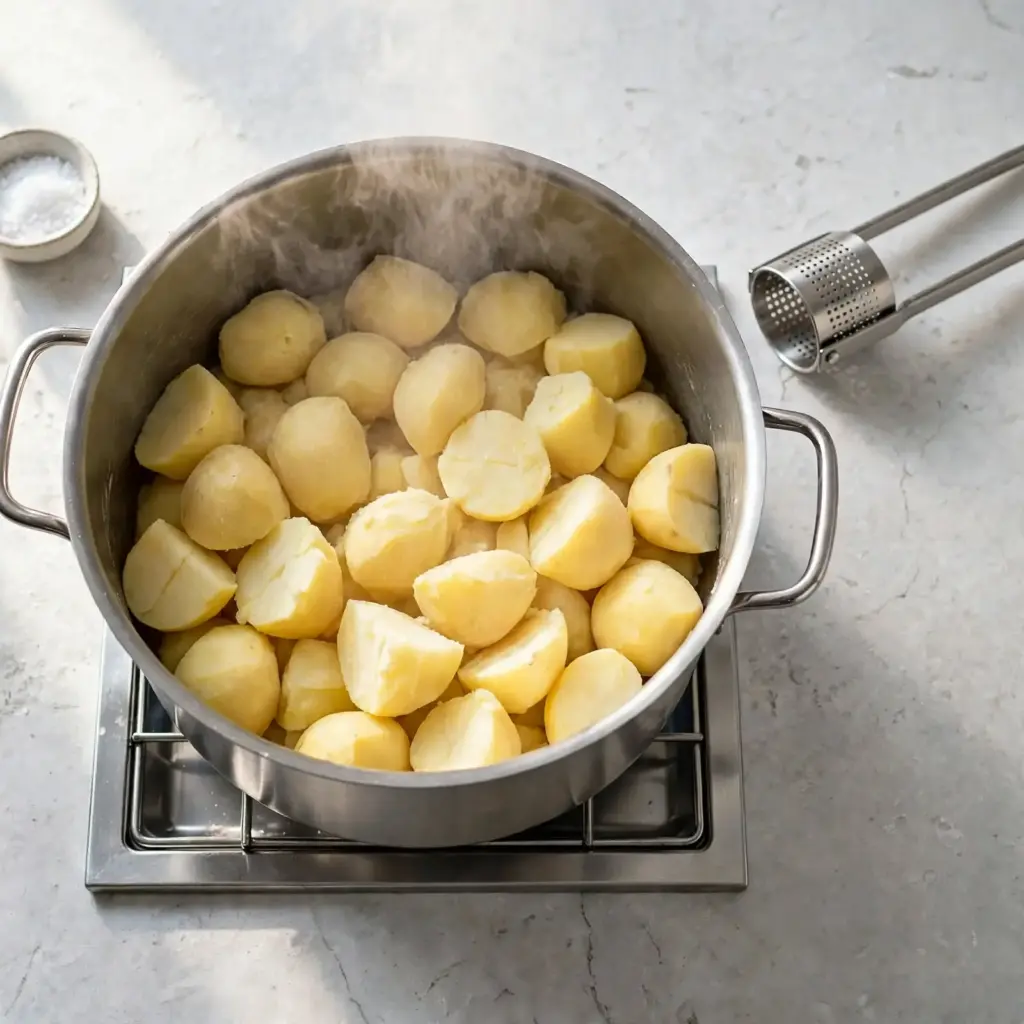
Drain the potatoes in a colander, then return them to the empty hot pot over low heat for 1 to 2 minutes, shaking the pot gently.
They’re ready when the surfaces look dry and slightly floury and the steam has mostly faded.
6. Mash Until Smooth
Press the potatoes through a ricer or work them with a hand masher until no large lumps remain.
Skip the blender or a mixer on high speed, because overworking releases too much starch and makes the mash gluey.
7. Fold in the Warm Dairy
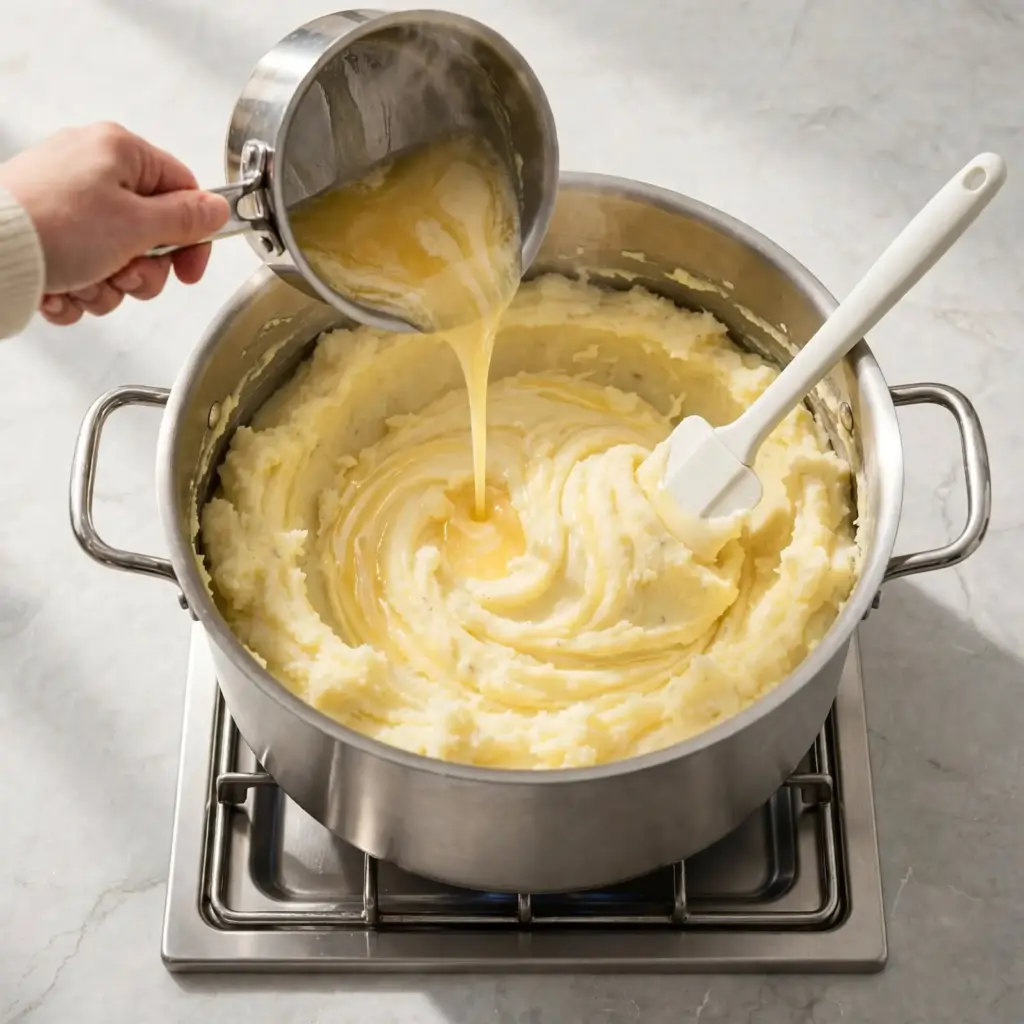
Pour in about half of the warm butter mixture and fold gently with a spatula, then add the rest a little at a time until it’s as creamy as you like.
Adding it gradually lets you stop at your favorite consistency, whether that’s thick and fluffy or soft and spoonable.
8. Season and Serve
Stir in the fine salt and pepper, taste, and adjust. Spoon into a warm bowl, top with an extra pat of butter and the chives, and serve right away.
Taste after each pinch of salt, because the right seasoning is what turns good potatoes into the best mashed potatoes on the table.
Recipe Card
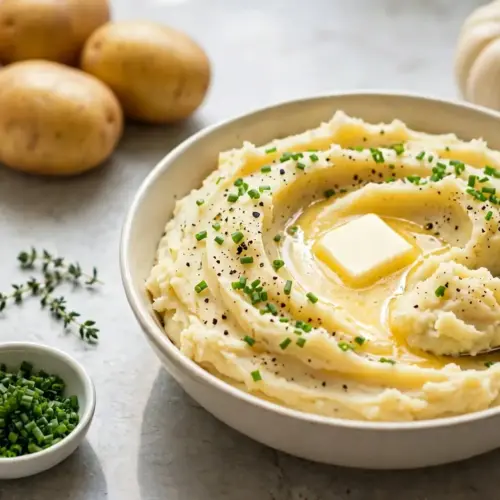
Creamy Mashed Potatoes
Ingredients
- 3 lb Yukon Gold potatoes peeled and cut into 2-inch chunks
- 1 tablespoon kosher salt for the cooking water
- 1/2 cup 1 stick unsalted butter, plus more for serving
- 1 cup whole milk
- 1/2 cup heavy cream
- 1 teaspoon fine salt plus more to taste
- 1/4 teaspoon freshly ground black pepper
- 1 tablespoon chopped fresh chives optional
Instructions
- Place the potato chunks in a large pot, cover with cold water by 1 inch, and add the kosher salt. Bring to a boil over high heat, then reduce to a steady simmer.
- Simmer 15 to 20 minutes, until a knife slides easily into the largest piece.
- Meanwhile, warm the butter, milk, and cream in a small saucepan over low heat until the butter melts and the mixture steams. Do not boil.
- Drain the potatoes, return them to the hot pot over low heat, and shake for 1 to 2 minutes until they look dry.
- Mash with a ricer or hand masher until smooth.
- Fold in half the warm butter mixture, then add the rest gradually until creamy.
- Season with salt and pepper to taste. Top with extra butter and chives and serve hot.
Notes
- Make ahead: Prepare through step 7, cool, cover, and refrigerate up to 2 days. Reheat with a splash of warm milk (see the make-ahead section below).
- Russets work in place of Yukon Golds for a fluffier, lighter texture; add a little extra milk.
- Avoid blenders and food processors, which turn the potatoes gluey.
Nutrition (per serving): Calories 300 | Carbohydrates 32g | Protein 5g | Fat 18g | Saturated Fat 11g | Cholesterol 54mg | Sodium 300mg | Fiber 3g | Sugar 3g
Tips for the Best Results
Ingredient Tips
- Buy potatoes of similar size so the chunks cut evenly with little waste.
- Use full-fat dairy for the richest texture; skim milk makes the mash thin and flat.
- Cut the butter into pieces before warming so it melts at the same pace the dairy heats.
Mixing Tips
- Mash while the potatoes are hot, since cooled potatoes turn stiff and lumpy.
- Fold with a spatula rather than stirring hard to keep the texture fluffy.
- Hold back a few tablespoons of the warm dairy to adjust the consistency at the very end.
Cooking Tips
- Keep the water at a gentle simmer, not a rolling boil, so the potatoes don’t get waterlogged.
- Test the largest chunk for doneness, not the smallest.
- Warm your serving bowl with hot water first so the mash stays hot longer on the table.
Troubleshooting Guide
Why are my mashed potatoes gluey?
Gluey texture comes from overworked starch, usually from a blender, food processor, or mixer on high. Use a ricer or hand masher and fold in the dairy gently; if a batch is already gluey, spread it in a baking dish, top with cheese and breadcrumbs, and bake it as a casserole.
How do I get rid of lumps in mashed potatoes?
Lumps mean the potatoes were undercooked or mashed after cooling. Cook until a knife slides in easily, mash while hot, and push any stubborn pieces through a ricer or fine sieve.
Why are my mashed potatoes watery?
The potatoes went into the pot still wet, or too much liquid was added at once. Dry them in the hot pot after draining, and if they’re already runny, stir over low heat for a few minutes to cook off moisture.
Why do my potatoes taste bland?
They weren’t seasoned while cooking. Salt the water well, then add fine salt gradually at the end and taste after each addition.
How do I loosen mash that’s too thick?
Stir in warm milk a tablespoon at a time until it’s soft and spoonable. Cold milk cools the mash down and doesn’t blend in as smoothly.
Variations
Garlic
Simmer four or five peeled garlic cloves with the potatoes and mash them right in for a mellow, savory flavor.
Loaded
Top with crispy bacon, shredded cheddar, sour cream, and green onions for a baked-potato twist.
Cream Cheese
Swap the heavy cream for 4 ounces of softened cream cheese to make tangy, extra-thick cream cheese mashed potatoes that hold up especially well when made ahead.
Red Skin (Skin-On)
Use scrubbed red potatoes with the skins left on and mash them a little rougher for rustic, colorful red skin mashed potatoes.
Brown Butter
Brown the butter in the saucepan until nutty and golden before adding the milk and cream for a toasty, deeper flavor.
Serving Options
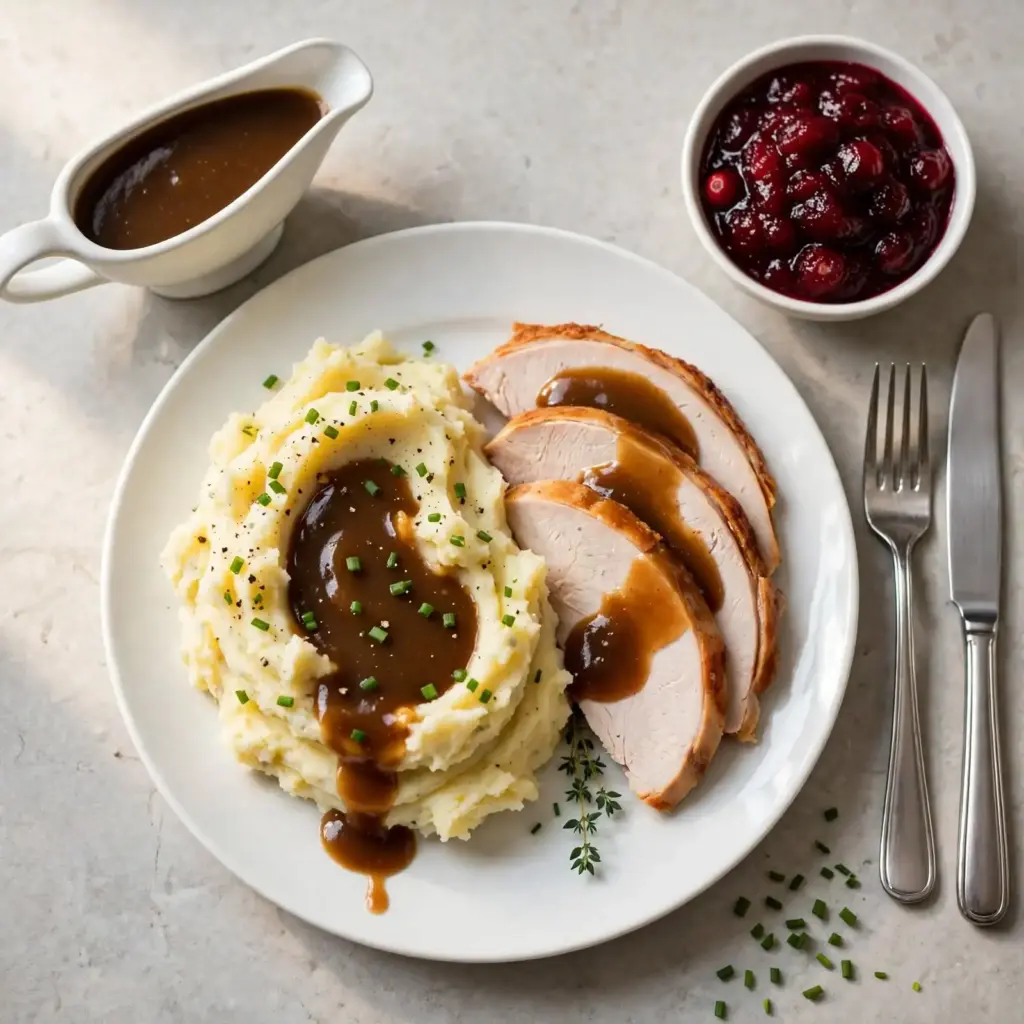
With Turkey Gravy
Make a well in the center of the mashed potatoes and fill it with rich turkey gravy for the classic holiday plate.
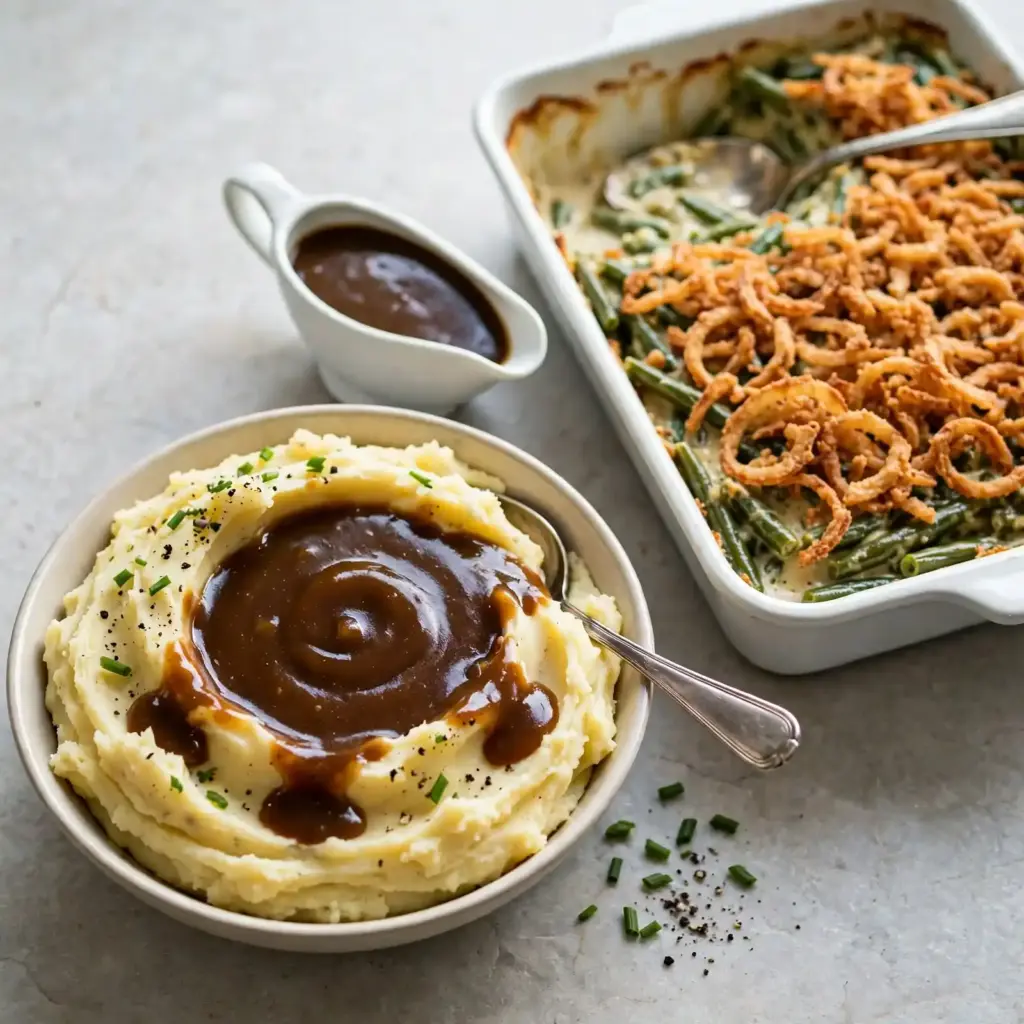
Alongside Green Bean Casserole
Pair them with my Green Bean Casserole recipe for a creamy, crunchy side-dish duo.
With Sweet Potato Casserole
Set them next to a pan of Sweet Potato Casserole recipe so everyone gets both savory and sweet on one plate.
Under Meatloaf or Pot Roast
Spoon them under sliced meatloaf or shredded pot roast so they catch every drop of the juices.
With Pan-Seared Pork Chops
Serve beside juicy pork chops and a quick pan sauce for an easy Sunday dinner.
Make-Ahead Mashed Potatoes
Making the mash a day or two early frees up your stove on a busy holiday, and it’s the trick that keeps my Thanksgiving mashed potatoes completely stress-free.
How to Prepare 1 to 2 Days Ahead
Make the recipe through seasoning, then spread it into a buttered baking dish and let it cool for no more than 1 hour. Press plastic wrap directly onto the surface to stop a skin from forming, cover tightly, and refrigerate for up to 2 days. Stirring in an extra 2 tablespoons of butter before chilling helps it stay creamy after reheating.
Reheating in the Oven
Let the dish sit out for 30 minutes, dot the top with butter, cover with foil, and bake at 350°F for 30 to 40 minutes, stirring halfway and adding a splash of warm milk if it looks dry.
Reheating in a Slow Cooker
Spoon the chilled mash into a greased slow cooker with 1/4 cup warm milk and heat on low for 2 to 3 hours, stirring every hour, then switch to the warm setting through dinner.
Reheating on the Stovetop
Warm in a heavy pot over low heat with a splash of milk, stirring often, for 10 to 15 minutes until hot all the way through.
Storage and Freezing
Room Temperature Storage
Leftover mashed potatoes shouldn’t sit out longer than 2 hours. Move them to an airtight container and refrigerate for 3 to 4 days.
Freezing
A buttery, cream-rich mash freezes better than a lean one. Portion it into freezer bags, press out the air, flatten the bags, and freeze for up to 3 months.
Thawing
Thaw overnight in the fridge, then reheat over low heat with a splash of milk, stirring to bring back the smooth texture. A little separation is normal and stirs right back in.
Frequently Asked Questions
What are the best potatoes for mashed potatoes?
Yukon Golds give the creamiest, most buttery result with the least effort. Russets make a fluffier, lighter mash but soak up more liquid. Red potatoes are best left skin-on for a rustic texture.
Should I peel potatoes before boiling them?
For a smooth, classic mash, yes. Peeling before boiling is easier than peeling hot potatoes, and it gives you an even, silky texture. Leave the skins on only when you want a rustic style.
Can I make mashed potatoes the day before?
Yes. Make them, cool them, cover them, and refrigerate for up to 2 days. Reheat in the oven at 350°F with a splash of warm milk and a few pats of butter.
How many potatoes do I need per person?
Plan on about 1/3 to 1/2 pound per person. Three pounds serves 8 as a side, and it can stretch to 10 on a holiday table with plenty of other dishes.
Can I use a hand mixer for mashed potatoes?
You can on low speed, but stop as soon as the potatoes look smooth. Mixers overwork the starch quickly, so a ricer or hand masher is the safer choice.
How do I keep them warm for a party?
Hold them in a slow cooker on the warm setting and stir in a splash of milk every hour. A heatproof bowl set over a pot of gently simmering water works too.
Why should I warm the milk and butter first?
Cold dairy cools the potatoes down and doesn’t absorb as evenly, which can leave the mash lukewarm and a little greasy. Warm dairy blends in smoothly and keeps everything piping hot.
Related Recipes
If you’re building a holiday spread, these pair beautifully with this side:
- Classic Green Bean Casserole for the holidays
- Sweet Potato Casserole for Thanksgiving dinner
- Homemade Pumpkin Pie
- Creamy Pumpkin Cheesecake